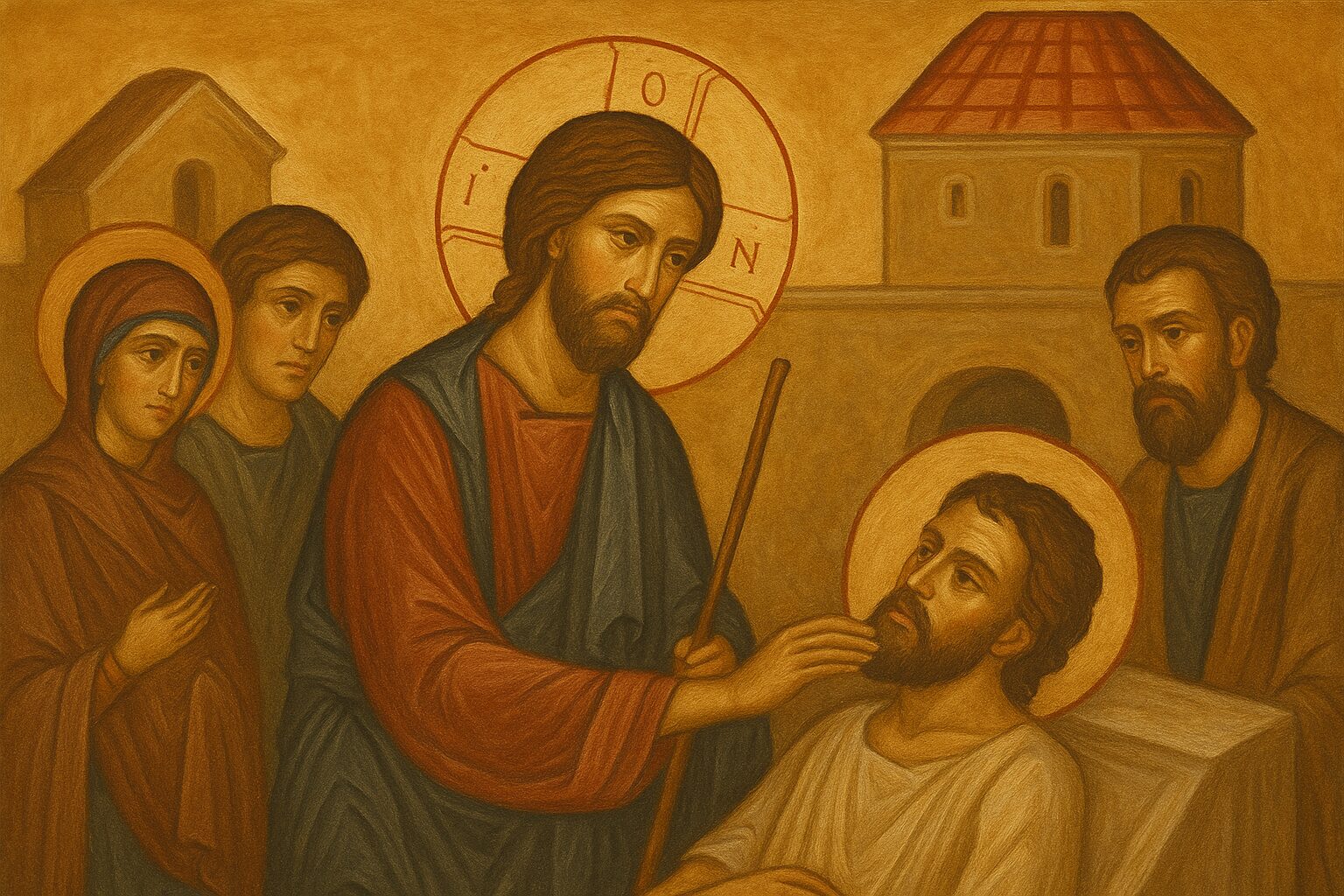
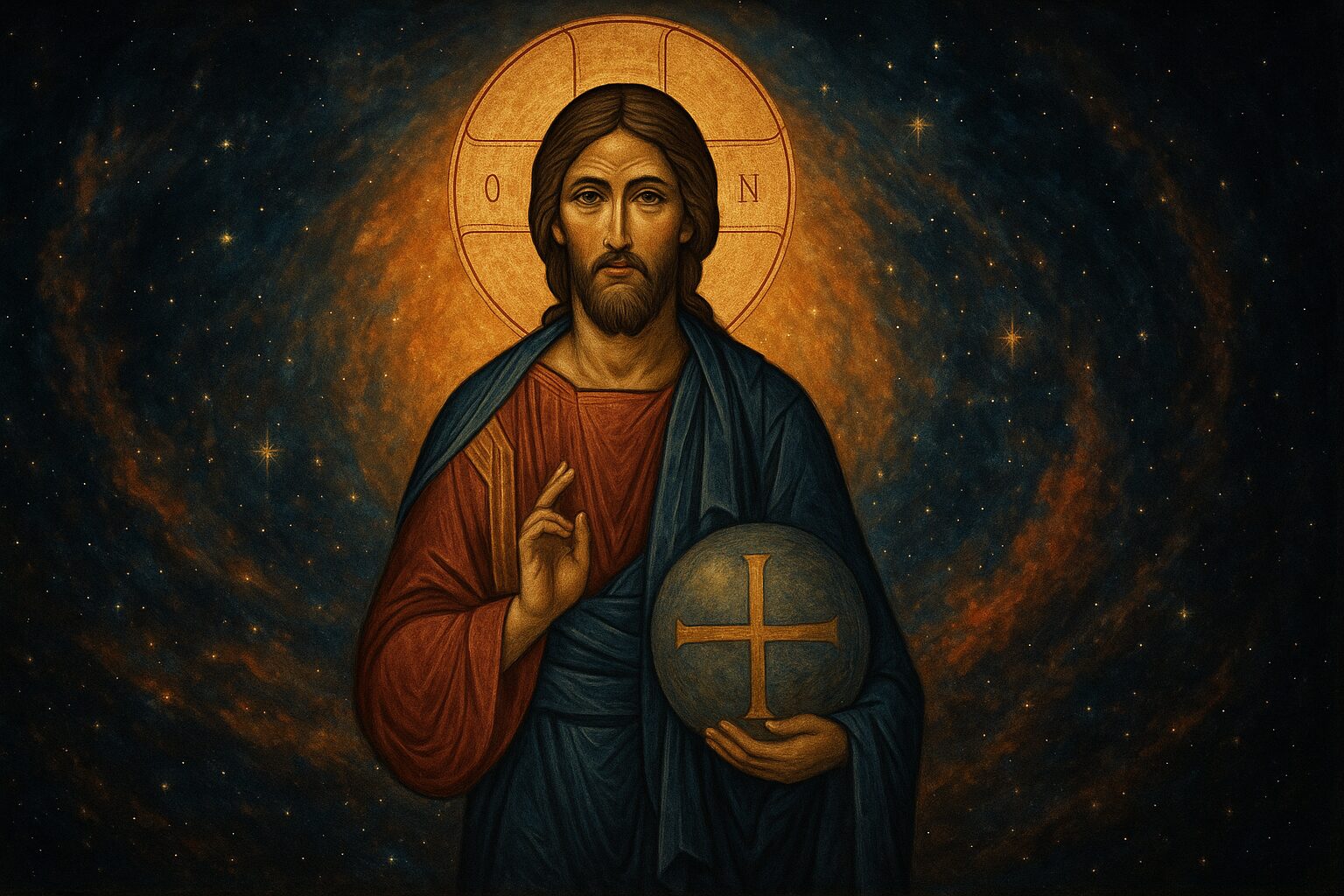
Adapted for inclusive devotion and personal or community use
1. Opening Blessing
Leader: Blessed is our God, the Fountain of Light and Love, now and always, and unto ages of ages.
All: Amen.
2. The Evening Prayers (Introductory)
Leader: Glory to You, O God, Source of all mercy. Glory to You, O Word, Light of the world. Glory to You, O Spirit, Giver of peace.
All: Holy and undivided Trinity, dwell within us and make this evening holy. Amen.
3. The Psalm of Evening (Psalm 103, abridged)
Bless the Lord, O my soul; O Lord my God, You are clothed in majesty and light. You stretch out the heavens like a tent, You make the clouds Your chariot, and You walk upon the wings of the wind. You send forth springs into the valleys, and all creation drinks from Your bounty. How manifold are Your works, O Lord; in wisdom You have made them all. Glory to You forever.
4. The Great Litany (Peace Litany)
Leader: In peace let us pray to the Lord.
All: Lord, have mercy.
Leader: For the peace from above, and the love that holds all things, let us pray.
All: Lord, have mercy.
Leader: For those who seek healing, and for all creation’s renewal, let us pray.
All: Lord, have mercy.
Leader: For rest this night, forgiveness of our sins, and hearts filled with compassion, let us pray.
All: Lord, have mercy.
Leader: For all people of faith and goodwill, that light may overcome all darkness, let us pray.
All: Lord, have mercy.
Leader: For this holy place, for all who gather in love and peace, let us pray.
All: To You, O Lord.
5. “O Lord, I Have Cried” (Psalm 141, shortened)
O Lord, I have cried to You, hear me; receive my prayer as incense before You. Let my heart be gentle and my spirit steadfast, that I may rest in Your love through the watches of the night.
6. Hymn of Light (Phos Hilaron)
O Joyful Light of the Holy Glory of the Living and Eternal One, Holy and Blessed are You. Now that the sun has set and evening comes, we sing praise to You— Giver of Life and Radiance of the world. We glorify You, O Loving God, for in Your light we see true Light.
7. The Prokeimenon of the Evening
Leader: The Lord is my strength and my song, and has become my salvation.
All: The Lord is my strength and my song, and has become my salvation.
Leader: I shall not die but live, and declare the works of the Lord.
All: The Lord is my strength and my song, and has become my salvation.
8. Prayer for the Evening
O God of mercy and light, who makes the day to pass and the night to come, receive our prayers as the fragrance of evening incense. Grant us peace of heart, forgiveness for what we have failed to love, and rest from all anxiety. Guard us under the shadow of Your wings, and bring us to the morning renewed in faith and joy. For Yours is the kingdom, the power, and the glory, now and ever and unto ages of ages. Amen.
9. The Aposticha (Evening Verses)
In You, O Lord, I find my peace. You make the darkness luminous with Your presence. You call us from striving into stillness, from fear into trust, from weariness into Your gentle rest.
10. Song of Simeon (Nunc Dimittis, Luke 2:29-32)
Now let Your servant depart in peace, O Lord, for my eyes have seen Your salvation, which You have prepared before all peoples— a light to reveal You to the nations, and the glory of those who love You. Amen.
11. Closing Prayers
Leader: Let us commend ourselves and all creation to the mercy and love of God.
All: To You, O Lord.
Leader: Through the compassion of the Most High, and the grace of the Eternal Word, and the peace of the Holy Spirit— may our night be blessed, our rest be gentle, and our hearts awaken to joy.
All: Amen.
12. Dismissal
Leader: May the blessing of God— the Eternal Light, the Living Word, and the Spirit of Peace— be upon you and remain with you always.
All: Amen.
(A brief chant, bell, or silence may close the service.)
“The mercy of God is not exhausted in forgiving sins, but extends to the healing of the whole man.” — St. Isaac the Syrian, Ascetical Homilies I
I. Introduction — Healing as the Restoration of Communion
In the Eastern Christian tradition, the mystery of healing is never separated from the mystery of salvation. Humanity’s sickness, both physical and spiritual, is understood as a rupture of communion — a distortion of the image of God within the human person and the creation entrusted to our care. Therefore, every act of healing is simultaneously an act of reconciliation and divinization. To be healed is to be re-united with God, to be made whole once more through participation in divine life.
This vision stands at the heart of the Eastern Church’s sacramental worldview, where grace is not a distant abstraction but a tangible reality that penetrates body and soul. Healing is not simply a mercy extended to human weakness; it is a manifestation of Theosis, the gradual transformation of the human person into the likeness of God. The early Fathers repeatedly insist that salvation is not escape from the body, but the sanctification and transfiguration of the body through the Incarnation and the Holy Spirit.
II. The Incarnational View of the Human Person
The mystery of the Word made flesh lies at the foundation of Eastern Christian anthropology. When the eternal Logos assumed human nature, He did not redeem only the spiritual or rational aspect of humanity but embraced the totality of our being. As St. Gregory Nazianzen declared: “That which He has not assumed He has not healed; but that which is united to His Godhead is also saved.”¹
In this single line, the Church’s entire theology of healing is contained. The Incarnation reveals that the body itself is a locus of divine grace, capable of bearing within it the energies of God. Thus, for the Eastern Fathers, bodily suffering is not a mere obstacle to salvation, nor a punishment, but a mystery through which divine compassion is revealed.
St. Basil the Great, in his Longer Rules, teaches that the care of the sick is a sacred duty precisely because the body is “a companion and servant of the soul.”² For Basil, to neglect the physical welfare of others is to deny the integrity of the human person. The hospitals founded under his direction in Caesarea — known collectively as the Basileias — were not merely philanthropic institutions but embodiments of the Church’s sacramental care for the whole person. Healing was understood as liturgy extended beyond the sanctuary.
III. Healing and Theosis — The Goal of Human Life
The aim of human existence, according to the Eastern Fathers, is Theosis, or participation in the divine nature.³ Healing, in this light, is not an isolated miracle but part of the ongoing process by which humanity is restored to its original glory. St. Athanasius, in On the Incarnation, wrote: “The Word of God became man so that we might become God.”⁴ The sickness of sin is healed only when humanity is re-united with the divine life that is its true health.
St. Maximus the Confessor deepened this vision by describing salvation as the “recapitulation of all things in Christ.”⁵ The human being, composed of body and soul, becomes a microcosm of creation, called to reconcile the material and the spiritual. Healing, therefore, is cosmic as well as personal; it is the transfiguration of all creation in Christ. The divine energies flow through the sacraments, through prayer, through ascetic struggle, renewing the entire cosmos.
St. Gregory Palamas, the great 14th-century Hesychast theologian, taught that divine grace is communicated through the uncreated energies of God, which sanctify not only the soul but also the body: “The body shares in the sanctification of the soul, being united with it and filled with divine grace.”⁶ Theosis is not purely interior; it is embodied, luminous, radiant through matter.
IV. Healing in the Early Church
From the earliest centuries, the Church’s ministry included the healing of the sick as a sign of Christ’s resurrection power. The Acts of the Apostles records that “many signs and wonders were done among the people by the hands of the apostles” (Acts 5:12). The laying on of hands, the anointing with oil, and the prayer of faith became normative expressions of the Church’s pastoral care.
The Apostolic Tradition, attributed to St. Hippolytus (early 3rd century), includes explicit instructions for the blessing of oil for healing: “Let the bishop give thanks over the oil and say: ‘O God, who sanctifies this oil, grant health to those who use it, that it may give strength to all who are anointed with it.’”⁷ Here we see the early Church understanding healing as a sacramental act — not magical, but participatory, invoking divine energy through visible matter.
St. John Chrysostom, writing in the 4th century, connects bodily healing to forgiveness and communion: “The same power that forgives sins also heals the body. For the sickness of the body is often a result of the sickness of the soul.”⁸ For Chrysostom, sin and sickness share a common root — the fragmentation of the divine image — and thus both require the same remedy: repentance, grace, and the life of the Church.
V. The Sacrament of Holy Unction
The anointing of the sick, or Holy Unction, is the most explicit expression of healing as sacrament in the Eastern Church. Its biblical foundation lies in the Epistle of James: “Is any among you sick? Let him call for the presbyters of the Church, and let them pray over him, anointing him with oil in the name of the Lord; and the prayer of faith shall save the sick, and the Lord shall raise him up; and if he has committed sins, he shall be forgiven” (James 5:14–15).
In the Byzantine rite, the service of Holy Unction is a solemn and communal act, not reserved only for the dying but offered for all who seek healing of body and soul. The oil, blessed by seven priests, becomes a tangible sign of the Holy Spirit’s presence. The prayers interweave petitions for forgiveness, restoration, and illumination. One of the prayers reads:
“O Lord, who by Thy mercies and compassions heal the sufferings of our souls and bodies, sanctify this oil, that it may be for Thy servants who are anointed with it unto healing and the banishing of every passion, every defilement of flesh and spirit, and every evil.”⁹
This prayer reflects the Eastern conviction that bodily illness is often interwoven with the spiritual passions (pathē), which must also be healed. The sacrament therefore addresses both levels of human brokenness — the visible and the invisible.
St. Nicholas Cabasilas, in his 14th-century treatise On the Life in Christ, describes Unction as the sacrament that “restores the sick, purifies the soul, and reconciles man to God.”¹⁰ Cabasilas emphasizes that the anointing does not replace medicine or natural means of cure; rather, it sanctifies them by uniting them to the divine economy of grace. The physician and the priest both participate in God’s healing work.
VI. Healing in the Divine Liturgy
Every liturgical act in the Eastern Church is implicitly an act of healing. The Eucharist itself is proclaimed to be “for the healing of soul and body.” In the Liturgy of St. Basil the Great, the celebrant prays after Communion: “Keep us holy in Thy fear, that we may partake of Thy holy Mysteries unto the healing of soul and body.”¹¹
The Fathers saw the Eucharist as medicine — not in a metaphorical sense, but as the very antidote to death. St. Ignatius of Antioch called it “the medicine of immortality, the antidote that we should not die but live forever in Jesus Christ.”¹² Participation in the Body and Blood of Christ heals the entire human person by restoring communion with divine life.
This understanding shaped the Church’s pastoral practice: confession and repentance are necessary precisely because they clear the soul to receive healing grace. St. John Climacus, in The Ladder of Divine Ascent, writes: “Repentance is the daughter of hope and the renunciation of despair. It is reconciliation with the Lord by the practice of good deeds and the cleansing of conscience.”¹³ In the same spirit, the Eucharist is not isolated from healing; it is the culmination of it.
VII. The Desert Tradition: Healing of the Passions
The monastic tradition of the desert took the theme of healing to its interior depths. For the Desert Fathers and Mothers, the human heart is a battlefield where sickness manifests as the disordered passions — anger, lust, pride, fear, acedia. Healing, therefore, is the purification of the heart and the restoration of the nous, the spiritual intellect.
Evagrius Ponticus, one of the earliest systematizers of Christian ascetic psychology, described the spiritual life in medical terms: “Just as physicians diagnose diseases of the body, so the monk must discern the passions of the soul.”¹⁴ His writings influenced generations of monks who saw asceticism not as self-punishment but as therapy.
St. Isaac the Syrian continued this line, teaching that “the humble man approaches sickness with knowledge, knowing that it serves the healing of his soul.”¹⁵ Isaac insists that suffering, when united with prayer and repentance, becomes the very means by which God purifies and enlightens the soul. The true healing, he writes, is “to be set free from the sickness of self-love and to learn compassion for all.”¹⁶
Similarly, St. John of the Cross (though Western, resonating with this tradition) would later echo that the dark night is a purgative healing of desire — a theme first expressed in the Eastern deserts. The purpose of healing is union, not comfort.
VIII. Healing and the Resurrection
For the Fathers, all healing finds its meaning in the Resurrection of Christ. Death itself, the ultimate sickness, has been destroyed. St. John Damascene, in his Exposition of the Orthodox Faith, declares: “The resurrection is the renewal of human nature and the restoration of our soul and body to immortality.”¹⁷ To heal the body is to anticipate the resurrection; to heal the soul is to awaken it to its future glory.
The Eastern liturgies constantly intertwine healing and resurrectional imagery. The Paschal hymns proclaim, “Christ is risen from the dead, trampling down death by death,” and this victory is not merely eschatological but sacramental — enacted in every anointing, every Eucharist, every act of mercy.
St. Symeon the New Theologian, writing in the 11th century, describes the experience of divine light as the healing fire of the Holy Spirit: “When the light of the Spirit shines in the soul, it heals the passions, illumines the mind, and sanctifies the body.”¹⁸ Here, healing and illumination are one. Theosis, healing, and resurrection converge in the vision of uncreated light.
IX. Healing as Compassion — The Divine Physician
Throughout the Eastern tradition, Christ is venerated as the “Physician of souls and bodies.” The prayers of the Divine Liturgy and the Hours abound with this title. The Kontakion of the Anointing service addresses Him: “You, O Christ, who alone are quick to help, who alone are without sin, Physician of souls and bodies, visit and heal Thy servants.”¹⁹
This image of the compassionate healer is not sentiment but theology. God’s very nature is mercy, and His mercy is active — it restores, re-creates, transfigures. St. Isaac the Syrian famously wrote: “As a handful of sand thrown into the great sea, so are the sins of all flesh in comparison with the mind of God.”²⁰ To know God is to experience the infinite ocean of His compassion, which heals not by decree but by love.
Even ascetic struggle, so central to Eastern spirituality, is framed as therapy, not punishment. St. John Chrysostom tells his hearers: “Do not say, I am punished by sickness. Say rather, I am cured by it.”²¹ Such words epitomize the Eastern refusal to separate suffering from sanctification. The sickness that leads one to humility and prayer becomes an instrument of healing in itself.
X. Conclusion — Healing as the Manifestation of Divine Life
To speak of healing in Eastern Christianity is to speak of communion. The body and soul are healed not in isolation but in the life of the Church, through the sacraments, through prayer, through the descent of divine energies that permeate all things. Healing is the visible face of Theosis, the restoration of the human person as icon of God.
The Eastern Fathers remind us that healing is not opposed to suffering but fulfilled in it, just as resurrection is not apart from the Cross but revealed through it. The oil of Unction, the bread and wine of the Eucharist, the tears of repentance — all are channels of the same divine compassion.
Thus, in the Eastern Church, healing is truly sacrament: a visible participation in the invisible mercy of God, a foretaste of resurrection, and the radiant restoration of body and spirit in the light of divine love.
Bibliography
Gregory Nazianzen. Epistle 101: To Cledonius. In Nicene and Post-Nicene Fathers, Second Series, Vol. 7. Grand Rapids: Eerdmans, 1983.
Basil the Great. Longer Rules. In The Ascetic Works of Saint Basil, translated by W.K.L. Clarke. London: SPCK, 1925.
2 Peter 1:4; see also Kallistos Ware, The Orthodox Way. Crestwood, NY: St Vladimir’s Seminary Press, 1979.
Athanasius of Alexandria. On the Incarnation. Translated by A. Robertson. Crestwood, NY: St Vladimir’s Seminary Press, 1982.
Maximus the Confessor. Ambigua. In Patrologia Graeca 91.
Gregory Palamas. Triads I.3. In The Philokalia, Vol. 4. London: Faber and Faber, 1995.
Hippolytus of Rome. Apostolic Tradition 5. In The Apostolic Tradition: A Commentary by Bradshaw et al.Minneapolis: Fortress Press, 2002.
John Chrysostom. Homilies on the Gospel of Matthew, 33. In Nicene and Post-Nicene Fathers, First Series, Vol. 10. Grand Rapids: Eerdmans, 1989.
Euchologion Mega: Service of Holy Unction. Greek Orthodox Church, Athens Edition.
Nicholas Cabasilas. The Life in Christ. Translated by Carleton T. Brown. Crestwood, NY: St Vladimir’s Seminary Press, 1974.
Basil the Great. Anaphora of the Divine Liturgy of St. Basil the Great.
Ignatius of Antioch. Letter to the Ephesians 20:2. In Early Christian Writings, translated by Maxwell Staniforth. London: Penguin, 1987.
John Climacus. The Ladder of Divine Ascent. Translated by Colm Luibheid and Norman Russell. Mahwah, NJ: Paulist Press, 1982.
Evagrius Ponticus. Praktikos. In The Philokalia, Vol. 1. London: Faber and Faber, 1979.
Isaac the Syrian. Ascetical Homilies I. Translated by Dana Miller. Boston: Holy Transfiguration Monastery, 1984.
Ibid., Homily 34.
John Damascene. Exposition of the Orthodox Faith IV.27. In Nicene and Post-Nicene Fathers, Second Series, Vol. 9. Grand Rapids: Eerdmans, 1983.
Symeon the New Theologian. Hymns of Divine Love. Translated by George A. Maloney. Mahwah, NJ: Paulist Press, 1980.
Euchologion Mega: Service of Holy Unction.
Isaac the Syrian. Ascetical Homilies I.
John Chrysostom. Homilies on the Statues 3.6. In Nicene and Post-Nicene Fathers, First Series, Vol. 9. Grand Rapids: Eerdmans, 1989.
Reading the Gospel Through the Aramaic Lens and the Witness of the Fathers
Introduction: Why This Question Matters to Me
In my ongoing studies of theology and sacred language, I’ve been delving deeply into the Aramaic understanding of Jesus—the living context of his words, prayers, and teachings. This exploration has begun to reshape how I perceive the entire Christic message. Reading Scripture through Aramaic eyes reveals meanings that the Greek, Latin, and English translations can sometimes veil: faith as embodied trust, forgiveness as release, sin as disharmony, and the Kingdom as the active presence of God within and among us.
From within this renewed lens, one profound question has stayed with me:
If Adam and Eve had not sinned in the Garden, would Christ still have become incarnate?
This inquiry is not merely speculative; it touches the very heart of divine intention, creation’s purpose, and the nature of Love itself. The reflections below seek to explore this question honestly, drawing upon the Aramaic Gospels, the early Church Fathers, and the broader mystical Christian tradition—to uncover what the Incarnation truly means, beyond the boundaries of sin and redemption.
Summary (for skimmers)
Many Latin-Western theologians (following Augustine and Aquinas) taught that Christ’s Incarnation was necessary because of human sin. Yet the Eastern tradition, several major Fathers, and the Franciscan (Scotist) school present a deeper vision: the Incarnation as God’s original intention—the cosmic “Yes” of Divine Love, not merely a rescue plan.
The Aramaic worldview amplifies this mystical truth: faith as trust/alignment, “forgiveness” as release, the “Kingdom” as God’s present reign, and Christ as the unique manifestation (Iḥidaya) of Divine Oneness. In this light, even if Adam and Eve had not sinned, the Word’s embodiment would still stand as the natural fulfillment of creation.
Why Aramaic Matters: Returning to Jesus’ Everyday Tongue
Jesus spoke Aramaic, the living Semitic language of first-century Palestine. The earliest full Aramaic New Testament, the Syriac Peshitta, preserves a worldview closer to that of Jesus and his first followers.
When read through this lens, the Gospel becomes less juridical and more relational, less abstract and more experiential:
John 1:1 (Peshitta): “In the beginning was the Miltha.” The Aramaic Miltha means manifestation, essence, creative word, not simply a spoken term. It implies the Divine Presence actively expressing itself through all creation.
John 3:16 (Peshitta): God gives His Iḥidaya—the Unique One—that humanity may find eternal life. The term conveys uniqueness and oneness more than biological begetting.
Luke 6:36: The Aramaic for “merciful” (rḥm) comes from the root meaning “womb.” God’s mercy, then, is womb-like love—nurturing, compassionate, creative.
In short, the Aramaic idiom consistently reveals a theology of union, presence, and compassion—a vision deeply consonant with the mystical Fathers.
Key Aramaic Nuances That Shift the Emphasis
English
Aramaic Meaning
Theological Implication
Believe
Hayman — to trust, align, rely upon
Faith as lived relationship, not mental assent
Only-begotten Son
Iḥidaya — the Unique/Only One
Christ as the singular embodiment of divine unity
Kingdom of God
Malkutha d’Alaha — active reign/presence
The Kingdom as present reality, not distant realm
Sin
Khata — to miss the mark
Disharmony to be realigned, not guilt to be punished
Forgive
Shbaq — to release, let go
Liberation and restoration of wholeness
These nuances transform Christianity from a courtroom to a communion—a participatory relationship where divine love restores harmony within creation.
Two Great Streams on Why the Incarnation
The Western “Felix Culpa” View (Augustine → Aquinas)
In the Latin West, sin was central to the logic of the Incarnation. Humanity’s fall created a debt only divine love could repay. Aquinas writes:
“If man had not sinned, the Son of Man would not have come.” (Summa Theologiae III, q.1, a.3)
This tradition views Christ as Redeemer first, and the Incarnation as contingent upon the Fall.
The Eastern and Mystical Vision (Irenaeus → Maximus → Scotus)
In the East, the Incarnation is seen not as a repair, but as the fulfillment of divine intention.
St. Irenaeus (2nd c.) taught that Christ came to recapitulate all things (Eph 1:10), summing up creation and leading it to completion.
St. Athanasius (4th c.) declared, “God became man that man might become God [by grace].”
St. Maximus the Confessor (7th c.) proclaimed the Incarnation as “the pre-conceived goal of creation.”
Bl. John Duns Scotus (13th c.) later affirmed that even if no one had sinned, Christ would still have come, for the Incarnation was willed from eternity as the supreme expression of divine love.
This vision finds resonance in the Aramaic worldview: God’s desire to be known and experienced in matter—Love becoming visible.
Scripture at the Center: The Cosmic Christ
John 1:1–3 — All things come to be through the Miltha; the Word is the light and life of humanity. Colossians 1:15–20 — Christ is the image of the invisible God; in Him all things hold together. Ephesians 1:9–10 — God’s purpose is “to sum up all things in Christ.”
In this cosmic vision, the Incarnation is not an afterthought to sin but the pattern and purpose of creation itself.
The Aramaic Emphasis in Context
Faith (haymanutha) is alignment with divine reality.
Mercy (rḥma) is womb-love—a mothering compassion at the heart of God.
The Son (Iḥidaya) embodies divine oneness.
Kingdom (Malkutha) is present divine presence.
Thus, Christ is not reacting to sin but revealing the fullness of divine intent—creation’s destiny realized in flesh.
Would Christ Have Come Without the Fall?
From the Western juridical perspective: likely not. From the Eastern and Aramaic perspective: inevitably yes.
“Creation itself is a movement toward Incarnation.” Sin makes redemption necessary, but Love makes embodiment inevitable.
The Incarnation, in this sense, is the flowering of creation, not its repair. The Cross still redeems the broken, but the Incarnation reveals the purpose for which all things exist: union with Divine Love.
Pastoral and Mystical Implications
Theosis over legalism — The spiritual life is about participation in divine life, not mere pardon.
Sacraments as presence and release — Each sacrament becomes an act of divine alignment and restoration.
Christ at the heart of the cosmos — All creation points toward and through Him.
Ecumenical unity — This vision bridges East and West, faith and mysticism, theology and embodiment.
Sources and Citations
Peshitta (Syriac New Testament) — John 1:1; John 3:16; Luke 6:36 (Dukhrana & Gorgias resources)
Aquinas, Summa Theologiae, III, q.1, a.3
Irenaeus, Adversus Haereses (on recapitulation)
Athanasius, On the Incarnation
Maximus the Confessor, Ambigua
John Duns Scotus, Ordinatio III, d.7, q.3
Colossians 1:15–20; Ephesians 1:9–10; John 1:1–3 (Scriptural support)
Closing Reflection
If Miltha means “the Manifesting Presence,” then the Incarnation is not a divine reaction but a revelation of what has always been true: God’s love seeking full expression in matter.
Christ’s birth, life, death, and resurrection unveil the eternal movement of Love toward union—the Divine longing to be known through creation. Even without sin, that Love would still have spoken the same Word: